



Ministry Facilitates Zero Tariff Fish Exports To Japan
- Editor Sri Wahyuni
- 18 Jan 2026
- Voice of Indonesia
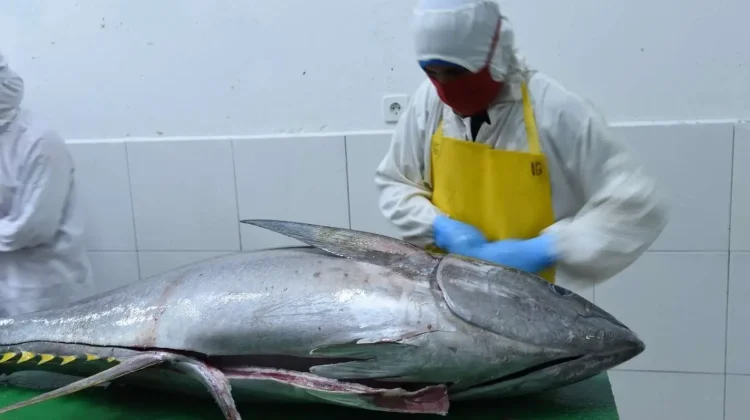
RRI.CO.ID, Jakarta - Indonesia is preparing to boost its competitiveness in Japan’s seafood market as the Ministry of Marine Affairs and Fisheries (KKP) announced plans to facilitate fish processing units (UPI) seeking zero-percent export tariffs for tuna, skipjack, and mackerel under the revised Indonesia–Japan Economic Partnership Agreement (IJEPA).
Acting Director General for Strengthening the Competitiveness of Marine and Fisheries Products, Machmud, said in Jakarta on Sunday, January 18, 2026, that the updated agreement accommodates Indonesia’s interests, including the removal of four tariff lines for processed tuna and skipjack.
“Previously, canned and other processed tuna exports from Indonesia to Japan faced a 9.6 percent tariff. With this revision, our products will be far more competitive,” he explained.
Indonesia currently ranks third among exporters of canned and processed tuna to Japan, with shipments valued at USD 30.28 million. The country’s compound annual growth rate (CAGR) of 13.82 percent outpaces competitors such as Thailand (12.12 percent) and the Philippines (6.31 percent). “With zero tariffs, we are optimistic Indonesia can become the number one supplier in Japan,” Machmud added.
To implement the policy, the KKP Ministry is preparing a ministerial circular outlining procedures for obtaining zero-percent registration numbers for processed tuna and skipjack products, excluding canned goods, under Japan’s harmonized system (HS) codes 1604.14.091 and 1604.14.099. Exporting UPIs must be registered with KKP Ministry to qualify.
Director of Marketing at the Directorate General of PDS, Erwin, noted that the first round of applications can be submitted via email to ekspor-ikan@kkp.go.id until January 26, 2026.
The revised IJEPA protocol was signed on August 8, 2024, by Indonesia’s Minister of Trade and Japan’s Minister of Foreign Affairs. Tuna and skipjack remain Indonesia’s second-largest export commodity, holding a 17 percent market share.
Marine Affairs and Fisheries Minister Sakti Wahyu Trenggono previously expressed confidence that Indonesia’s tuna and skipjack production will continue to grow, not only in Japan but also in markets such as Singapore. He emphasized the importance of cold storage facilities to maintain quality, enhance competitiveness, and expand exports to more destinations. ***